Heartcare
A heart health companion app for millennials -"Awareness, one heartbeat at a time
00
problem
How might we raise awareness of heart attack risks and support healthier lifestyle habits for millennials in India, so that they can recognise early warning signs and take preventive action?
solution
Working through Jazzy Olive's interdisciplinary workshop using the IDEO Design Kit, I chose heart attacks in young adults as my wicked problem - a complex issue driven by stress, lifestyle, and low awareness, particularly in India where young adult cardiac events are rising sharply.
HeartCare — Designing for the Heart Patient No One Talks About
👨🦰A 28-year-old millennial in India. Stress smoker. Skipping medications. Ignoring chest burns. Not because he didn't care — but because no one had ever made heart health feel relevant to him.
That was the human story at the centre of HeartCare, my MA project at Falmouth University rooted in IDEO's human-centred design framework.
It started in Jazzy Olive's workshop, where I encountered design thinking for the first time — not as a process, but as a practice of genuine empathy. We interviewed Vanda North, a dyslexic author, about invisible disabilities in the workplace. The experience of designing with someone rather than for them changed everything about how I approached problems.
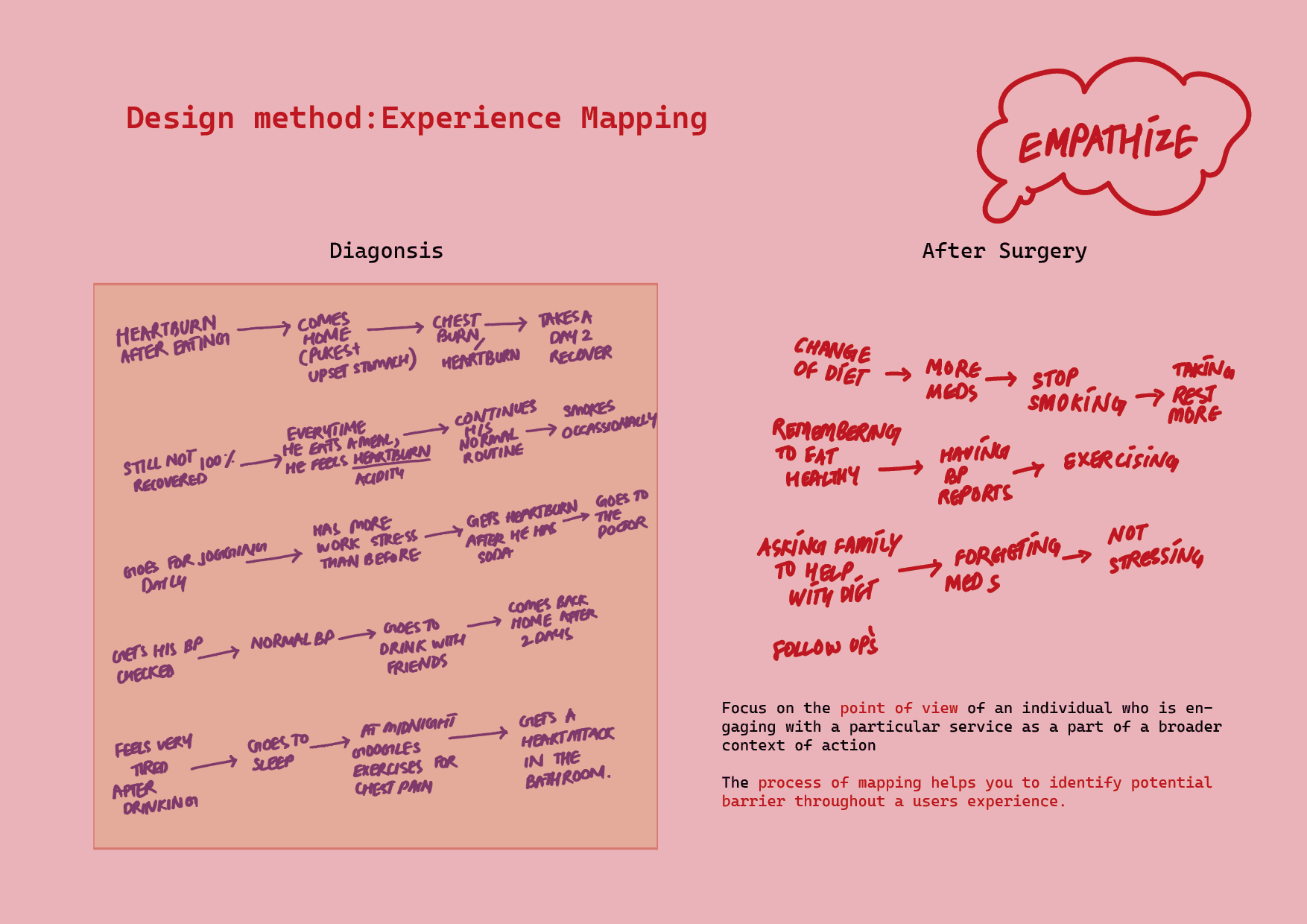
I brought that lens to my wicked problem: heart attacks in young adults. India sees a growing number of millennial cardiac patients — people too young to feel at risk, too busy to track their health, too overwhelmed to change. Through experience mapping and the 5W's method, I traced one patient's journey from heartburn after meals to a midnight heart attack in his bathroom. The gaps were everywhere: no reminders, no awareness, no gentle intervention.
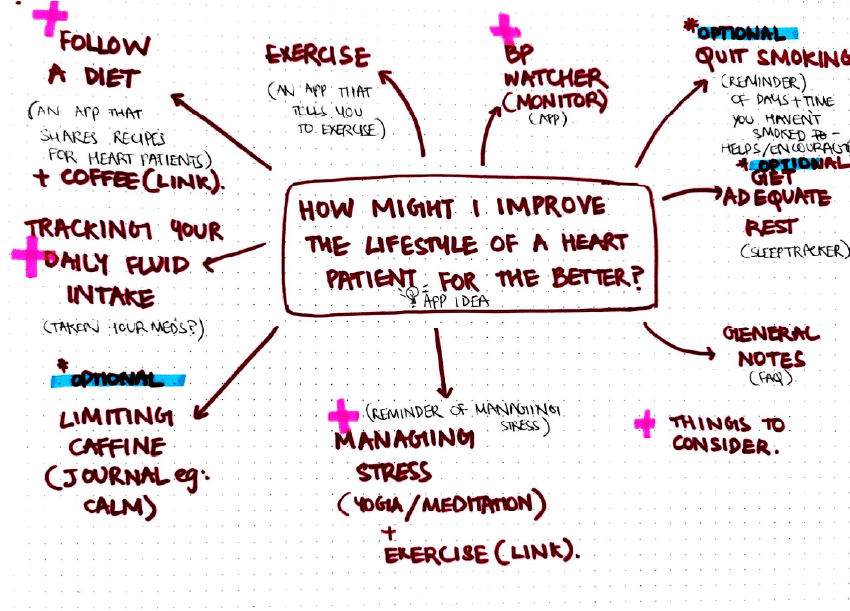
My "How Might We" questions led me to one core insight: the problem wasn't medical. It was behavioural. People don't need more information. They need a companion that meets them where they are.
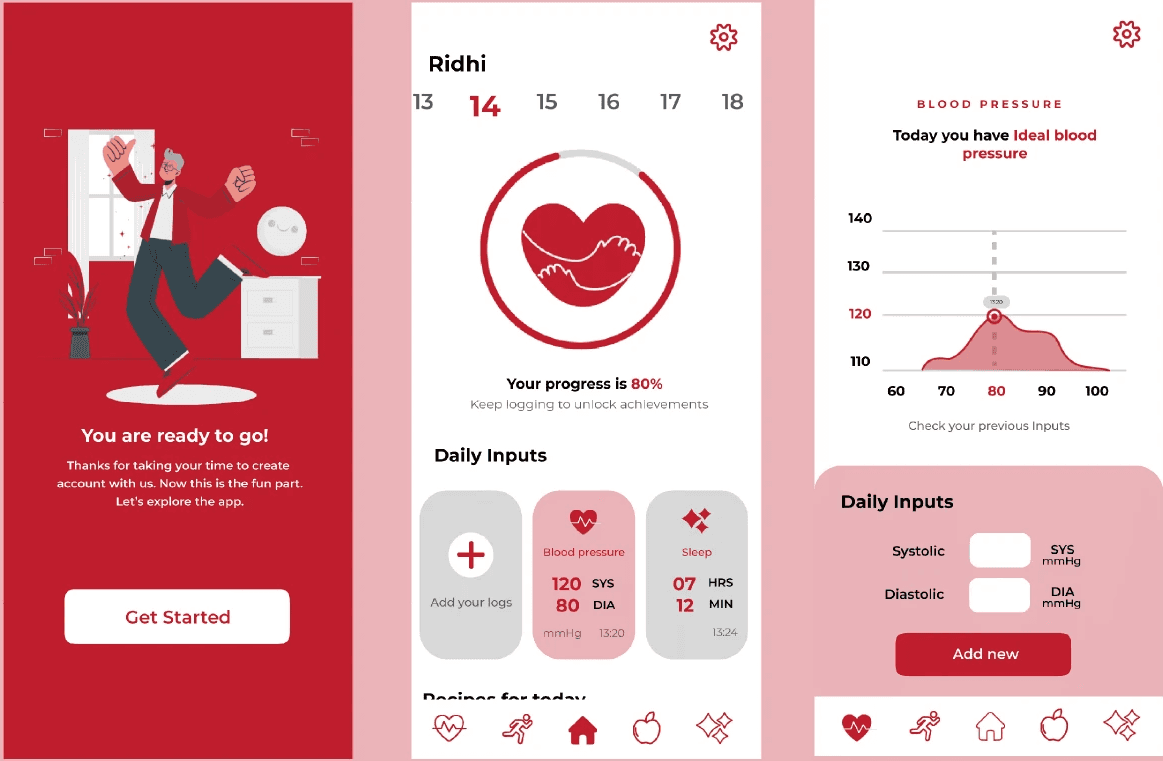
HeartCare became a personalised health tracking app — fully customisable through an onboarding questionnaire — tracking blood pressure, sleep, nutrition, exercise, fluid intake, medications, and stress. The design was warm and non-clinical by intention, using friendly illustrations and motivational nudges rather than medical dashboards.
User testing surfaced real feedback: add a diabetes tracker, integrate heart rate reading, allow doctor connectivity. Each response became a roadmap for the next iteration.
HeartCare taught me that designing for vulnerable people means designing with radical gentleness.
🔗 View on Behance: https://www.behance.net/gallery/193887171/Heart-Care
🔗 Full case study: https://separated-eustoma-e91.notion.site/2b103dd3de7e81f7bf6bcad82e0bc757?v=2b103dd3de7e81aabc4e000c70f318b8&pvs=143
year
2022 - 2023
timeframe
16 days
tools
Figma, Adobe
category
UI/UX
see also